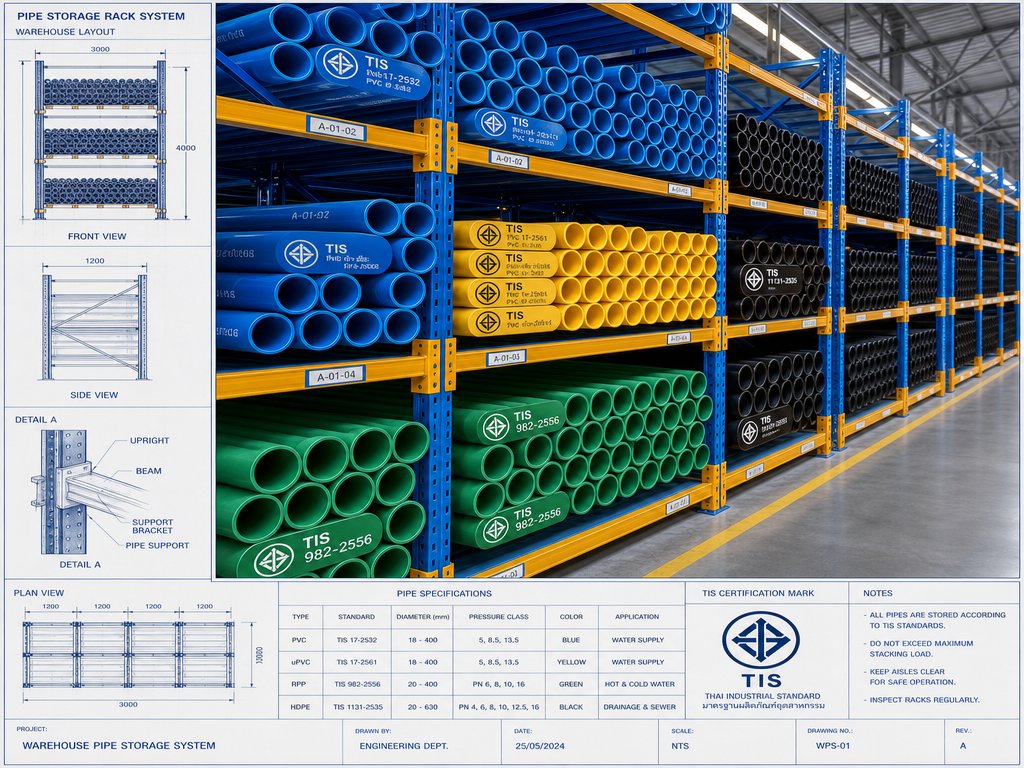
In Thailand, pipe color is more than a quick visual cue on site. For contractors, M&E engineers, procurement teams and project owners, it is a practical language that helps prevent specification errors, safety risks and costly rework. A blue pipe, yellow pipe, green pipe, black pipe, white pipe and grey pipe may look similar from a distance, but they can differ completely in raw material, pressure rating, joining method, heat resistance and legal compliance.
The most important rule is simple: color helps identification, but the printed marking on the pipe and the applicable Thai Industrial Standard are what determine whether a pipe is suitable for the job. In Thailand, the key standards commonly referenced in building and infrastructure work include TIS 17-2561 for rigid PVC pipes for drinking water, TIS 216-2524 for rigid PVC electrical and telephone conduits, and TIS 982-2556 for polyethylene pipes for potable water. Contractors should always verify the standard, class, nominal size, manufacturer, production date and certification mark before installation.
Why Pipe Color Codes Matter in Thai Construction
Thai job sites often involve multiple subcontractors working at speed: plumbing teams, electrical teams, fire protection teams, civil contractors and fit-out crews. Color coding reduces confusion, especially in high-rise condominiums, factories, hotels, warehouses and residential developments where many systems run in the same shaft or ceiling space.
- Safety: Using a yellow electrical conduit as a water pipe, or a blue PVC-U water pipe for hot water, can create serious failure risks.
- Compliance: Government projects, factories and large commercial developments often require pipe products with valid TIS certification or equivalent approved standards.
- Maintenance: Clear color identification helps maintenance teams isolate water, drainage and cable systems quickly.
- Cost control: Correct selection prevents leaks, burst pipes, electrical hazards, rejected inspections and replacement work.
Blue Pipes: PVC-U Pressure Pipes for Cold Water
Blue pipes are the most recognizable water pipes in Thailand. They are usually rigid PVC-U, also called unplasticized polyvinyl chloride, designed for cold water supply. The relevant Thai standard is commonly TIS 17-2561 for rigid PVC pipes for drinking water.
- Material: PVC-U, a rigid thermoplastic made from polyvinyl chloride resin without plasticizer.
- Typical standard: TIS 17-2561.
- Common pressure classes: Class 5, Class 8.5 and Class 13.5, depending on wall thickness and intended pressure.
- Joining method: Solvent cement joints with compatible fittings.
- Best uses: Residential cold water supply, low to medium pressure plumbing, irrigation lines, building water distribution and general utility water.
- Do not use for: Hot water lines, compressed air, chemical transfer without compatibility checks or locations with long-term direct UV exposure unless protected.
Blue PVC-U is popular because it is economical, light, easy to cut and familiar to Thai plumbers. However, its temperature limitation is critical. In Thailand’s hot climate, pipes installed on rooftops, exterior walls or under metal roofs can be exposed to high heat and UV. Proper support, shading and pressure selection are essential.
Yellow Pipes: PVC-U Electrical and Telephone Conduits
Yellow pipes in the Thai market are generally rigid PVC-U conduits for electrical wiring and communication cables. The main reference standard is TIS 216-2524, which covers rigid PVC pipes used for electrical and telephone conduit applications.
- Material: PVC-U formulated for conduit use, not for water pressure.
- Typical standard: TIS 216-2524.
- Best uses: Electrical wiring protection, telephone and communication cable conduits, wall embedment, ceiling spaces and general cable routing.
- Do not use for: Potable water, pressurized plumbing, drainage, gas lines or chemical lines.
- Site warning: Yellow conduit fittings and bends are designed for cable pulling, not hydraulic sealing.
For contractors, yellow pipe is one of the clearest examples of why color must be respected. It may be made from PVC-U like blue water pipe, but the formulation, dimensions, testing requirements and intended performance are different. Substituting yellow conduit for water service is a non-compliant shortcut and should never be accepted.
Green Pipes: PP-R Pipes for Hot and Cold Water
Green pipes in Thailand are commonly PP-R pipes, made from polypropylene random copolymer. They are widely used in premium residential buildings, hotels, hospitals, schools and commercial projects where hot water, higher temperature stability and long service life are required.
- Material: PP-R, or polypropylene random copolymer.
- Typical references: International standards such as ISO 15874 or DIN 8077 and DIN 8078 are commonly used; buyers should verify project-approved certification and test reports.
- Joining method: Heat fusion or socket fusion, creating a homogeneous joint when installed correctly.
- Best uses: Hot water supply, cold water supply, hotel bathrooms, condominium risers, mechanical rooms, hospitals and food-related non-process services where approved.
- Do not use for: Outdoor exposed installation without UV protection, high-temperature industrial fluids beyond rating or systems installed by untrained workers.
PP-R performs well for hot water, but installation quality is everything. Overheating, underheating, misalignment and insufficient insertion depth during fusion can reduce flow or cause joint failure. Thai contractors should use calibrated fusion tools, follow welding times and allow for thermal expansion, especially on long straight runs.
Black Pipes: HDPE for Buried, Outdoor and Utility Water Systems
Black pipes are commonly HDPE pipes, made from high-density polyethylene. In Thailand, HDPE is used extensively for municipal water supply, agricultural water, industrial utility lines, horizontal directional drilling and buried pipework. For potable water applications, TIS 982-2556 is a key reference for polyethylene pipes for drinking water.
- Material: HDPE, typically PE80 or PE100 grade depending on specification.
- Typical standard: TIS 982-2556 for polyethylene pipes for potable water.
- Joining method: Butt fusion, electrofusion or compression fittings depending on size and system requirement.
- Best uses: Underground water mains, long-distance water transmission, agricultural irrigation, factory utility water, pump discharge lines and infrastructure projects.
- Advantages: Excellent impact resistance, flexibility, corrosion resistance and suitability for buried applications.
- Do not use for: Hot water systems unless specifically rated, exposed fire-risk areas without protection or chemical lines without compatibility confirmation.
HDPE’s black color often comes from carbon black, which improves UV resistance. This makes it suitable for Thai outdoor conditions, but correct SDR or PN selection is still essential. For high-pressure pumping, water hammer must be considered, and fusion work should be performed by trained technicians with proper equipment.
White Pipes: Sanitary, Drainage and Architectural Utility Uses
White pipes in the Thai market are often used for sanitary drainage, waste, vent or architectural utility applications depending on the manufacturer’s product line. They are usually PVC-U, but their pressure rating and standard can differ significantly from blue water pipes.
- Material: Usually PVC-U, but buyers must verify the printed standard and intended application.
- Best uses: Indoor waste lines, vent pipes, light-duty drainage, exposed areas where appearance matters and certain sanitary systems.
- Do not use for: Pressurized potable water unless the pipe is specifically certified and rated for that purpose.
- Procurement note: White color alone does not prove suitability for drainage or pressure service; check markings and fittings.
White pipes are often chosen for aesthetics in visible indoor areas, service balconies or light commercial applications. In Thailand’s humid climate, installers should ensure correct slope, adequate pipe support and proper solvent cement application to prevent leaks and odor issues.
Grey Pipes: Drainage, Wastewater and Non-Pressure Systems
Grey pipes are commonly associated with drainage, sewerage, wastewater and non-pressure systems. They may be specified for soil, waste and vent systems, stormwater drainage or general building discharge lines. Like white pipe, grey pipe must be selected by standard, wall thickness and application, not by color alone.
- Material: Usually PVC-U or other plastic formulations depending on product type.
- Best uses: Drainage, wastewater, vent lines, rainwater leaders, floor drain discharge and non-pressure building services.
- Do not use for: Potable water pressure systems, hot water supply or electrical conduit unless specifically designed and certified.
- Installation focus: Correct slope, support spacing, expansion allowance and cleanout access are more important than pressure class.
For factories, kitchens and commercial buildings, chemical exposure should be reviewed. Domestic wastewater is usually within the capability of standard drainage products, but industrial discharge, high-temperature wastewater, grease and aggressive chemicals may require special materials or pretreatment.
PVC-U vs PP-R vs HDPE: The Real Material Differences
Color is useful, but chemistry determines performance. The three most important materials in this discussion behave very differently.
- PVC-U: Rigid, economical and easy to install with solvent cement. Excellent for cold water and many drainage applications, but limited by heat and impact conditions.
- PP-R: Heat-resistant polypropylene random copolymer for hot and cold water. Requires fusion welding and proper expansion design.
- HDPE: Flexible, tough and excellent for underground or outdoor utility systems. Requires fusion, electrofusion or mechanical joining and careful SDR or PN selection.
Industrial and Residential Selection Guide
- Detached houses and townhomes: Blue PVC-U for cold water, yellow PVC conduit for electrical, grey or white drainage pipe for wastewater, PP-R for hot water from heaters.
- Condominiums and hotels: PP-R for hot water risers and premium plumbing, blue PVC-U for cold water where permitted, grey drainage pipe for sanitary stacks, yellow conduit for electrical systems.
- Factories and warehouses: HDPE for buried utility water, PVC-U for selected cold water services, specialized materials for chemicals, yellow conduits for cable protection.
- Agriculture and irrigation: Blue PVC-U for fixed low to medium pressure lines and black HDPE for flexible long runs, outdoor exposure and buried networks.
- Infrastructure projects: HDPE under TIS 982-2556 for potable water transmission where specified, with fusion joint quality control and pressure testing.
Contractor Checklist Before Buying Pipe in Thailand
- Confirm the application: potable water, hot water, drainage, electrical conduit, irrigation or industrial utility.
- Check the printed pipe marking for TIS number, size, class, SDR, PN, manufacturer and production batch.
- Match fittings, solvent cement, fusion tools or electrofusion couplers to the pipe material.
- Consider Thai site conditions: UV, rooftop heat, monsoon rain, soil movement, flooding and maintenance access.
- Request certificates for TIS 17-2561, TIS 216-2524 or TIS 982-2556 where required by the project.
- Do not mix pipe colors or materials without engineer approval.
Final Takeaway
In the Thai construction market, pipe colors provide a fast visual guide, but they are not a substitute for standards and specifications. Blue usually means PVC-U cold water under TIS 17-2561. Yellow means PVC-U conduit under TIS 216-2524. Black often means HDPE water pipe under TIS 982-2556. Green commonly indicates PP-R for hot and cold water. White and grey are frequently used for sanitary, drainage and non-pressure systems. The professional approach is to read the marking, verify the certificate and match the pipe to the actual operating condition.