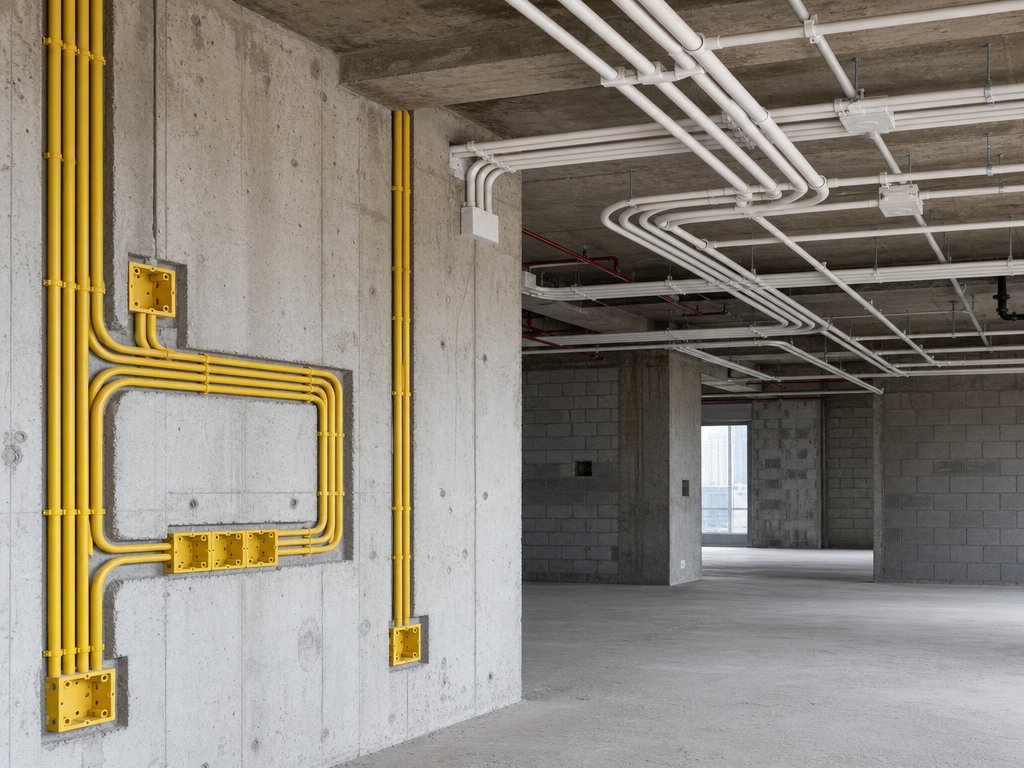
Electrical conduit selection is not a cosmetic decision. It affects fire performance, installation speed, long-term maintenance, building appearance and the safety of future excavation. Yellow PVC, White PVC and orange-striped black HDPE each solve a different routing problem. The most professional conduit strategy is to use each material where its chemistry and mechanical behavior provide the most value.
1. Yellow PVC: the standard choice for embedded building wiring
Yellow rigid PVC electrical conduit is commonly selected for conduits embedded in concrete slabs, beams, columns and masonry walls. Its key advantage is flame-retardant PVC chemistry. PVC naturally contains chlorine, and electrical-grade formulations are designed to resist ignition and self-extinguish when the flame source is removed.
- Best applications: concealed electrical routes in concrete, block walls, plastered walls and ceiling voids protected from impact.
- Performance focus: flame retardancy, insulation, corrosion resistance and compatibility with standard junction boxes and fittings.
- Design benefit: supports clean concealed wiring layouts without metal corrosion issues in damp building environments.
- Watch points: avoid excessive bending, protect from crushing before concrete pour, and use correct couplers and solvent cement for a continuous raceway.
2. White PVC: exposed interior wiring with architectural discipline
White PVC conduit is often used when electrical routing remains visible. In offices, retail stores, schools, hotels, clinics and renovated interiors, the conduit becomes part of the visual environment. White conduit blends better with painted walls and ceilings, helping the electrical system look intentional rather than temporary.
- Best applications: exposed indoor surface wiring, retrofit projects, low-rise commercial spaces, service rooms and ceiling-level routes.
- Performance focus: neat appearance, electrical insulation, lightweight handling and easy maintenance access.
- Design benefit: reduces the need for repainting and keeps wiring routes tidy in occupied spaces.
- Watch points: keep runs straight and parallel, use proper saddles at regular spacing, and avoid locations with high impact, heat or direct outdoor UV exposure unless the product is rated for it.
3. Orange-striped black HDPE: underground utility mains built for impact and soil movement
Orange-striped black HDPE conduit is engineered for underground electrical and utility infrastructure. The black body is typically stabilized for outdoor exposure, while the orange stripe helps identify the route as an electrical service during future excavation. Compared with rigid PVC, HDPE offers exceptional toughness, flexibility and crush resistance, making it ideal for buried mains and long-distance cable protection.
- Best applications: underground electrical mains, utility corridors, road crossings, factory compounds, solar farms, industrial estates and external feeder routes.
- Performance focus: high impact resistance, crush resistance, flexibility, soil-movement tolerance and long continuous runs.
- Design benefit: fewer joints over long distances, better survival under backfill and traffic loads, and clear color identification for safety.
- Watch points: HDPE is not the first choice for exposed indoor fire zones; use suitable bending radius, warning tape, bedding sand and proper pull boxes for cable installation.
How to choose: match conduit to route risk
- Embedded in concrete walls or slabs: choose Yellow PVC for flame-retardant concealed electrical routing.
- Visible inside a finished building: choose White PVC for a cleaner architectural appearance and easier inspection.
- Buried outdoors or under roads: choose orange-striped black HDPE for crush resistance, flexibility and utility identification.
- High-rise or fire-sensitive projects: confirm fire performance, wall thickness, fittings and local code requirements before procurement.
- Industrial projects: consider chemical exposure, cable pulling distance, trench depth, vehicle load and future expansion.
Procurement checklist for contractors and developers
- Specify conduit material, color, diameter, wall thickness and duty rating in the bill of materials.
- Match fittings, elbows, junction boxes and solvent or joining method to the conduit type.
- Check cable fill ratio and pulling tension before installation, not after the route is cast or buried.
- For underground HDPE, include trench bedding, warning tape, marker posts and as-built drawings.
- Buy from a distributor that can supply consistent batches for large projects and advise on suitable product selection.
Bottom line: Yellow PVC, White PVC and orange-striped HDPE are not interchangeable products. Yellow PVC is the practical concealed conduit for concrete-embedded building work. White PVC is the architectural solution for exposed indoor wiring. Orange-striped black HDPE is the heavy-duty underground pathway for utility mains. A well-designed project uses all three strategically, reducing risk while improving appearance, durability and maintenance efficiency.