For SME construction firms, the difference between a profitable project and a painful one is often hidden inside the bill of materials. Steel hardware, fasteners, anchors, abrasives, tools, safety products, sealants, and consumables may look like small line items, but together they influence cash flow, schedule reliability, and final margin.
Traditional offline procurement still dominates many job sites: phone calls, LINE messages, handwritten lists, verbal price checks, and manual quotation comparisons. It works until the project becomes urgent, the material list changes, or the site team needs proof of price, specification, and availability. That is where digital B2B e-commerce portals can create measurable savings. For well-managed SME contractors, moving hardware procurement online can reduce total BOM-related costs by up to 15% by eliminating waste that is usually invisible in the purchase price.
The real cost of offline procurement is not only the unit price
Many contractors negotiate hard on product prices but overlook the systemic costs created by manual purchasing. A supplier may offer a discount, but the project still loses money if materials arrive late, the wrong size is ordered, or the office team spends hours reconciling quotations and invoices.
- Logistical delays: Waiting for stock confirmation by phone can delay site work, create idle labor, and force emergency purchases at higher prices.
- Opaque pricing: When prices are shared case by case, project estimators cannot easily benchmark, compare, or lock in budget assumptions.
- Human error: Manual retyping of SKUs, sizes, quantities, and specifications increases the risk of wrong orders.
- Fragmented approvals: Site engineers, procurement teams, and finance departments often work from different documents, slowing decisions.
- Unplanned substitutions: When the required product is unavailable, rushed alternatives can compromise performance or require rework.
Where the 15% saving comes from
The 15% improvement is not a single discount. It is the combined effect of better data, faster decisions, and fewer purchasing mistakes across the full BOM lifecycle.
- 3-5% from price transparency: Digital portals allow buyers to compare product categories, pack sizes, brands, and bulk pricing in one place. This reduces overpaying and supports smarter standardization.
- 2-4% from reduced rework and wrong orders: Product images, technical descriptions, size filters, and order history help teams reorder the correct items consistently.
- 2-3% from lower administration time: Automated quoting, saved carts, downloadable documents, and order records reduce time spent on manual follow-ups.
- 2-3% from better logistics planning: Real-time availability and clearer delivery information help contractors consolidate orders and avoid last-minute transport costs.
- 1-2% from stronger project control: Digital purchasing history makes it easier to track consumption against the original BOM and identify budget leakage early.
Automated quoting turns procurement into a margin tool
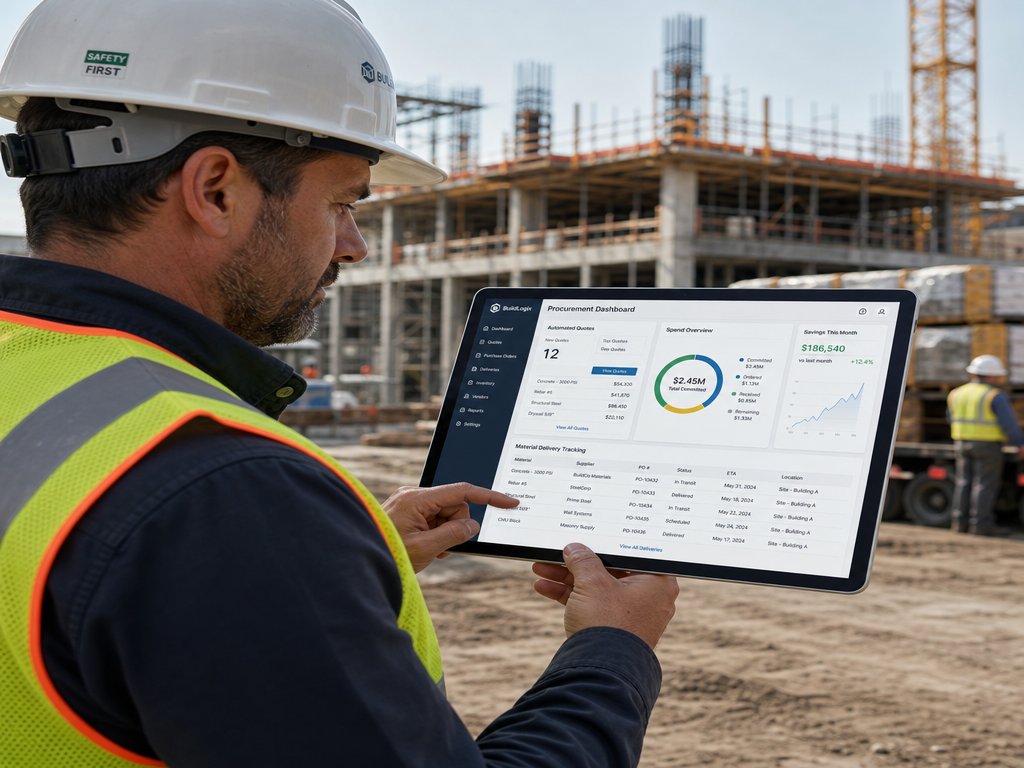
In offline purchasing, quotations are often treated as a routine administrative step. In digital procurement, automated quoting becomes a planning tool. Buyers can build a BOM online, adjust quantities, compare equivalent products, and submit a quote request without losing the logic behind the order.
This is especially valuable for SME contractors that do not have large procurement departments. A digital B2B platform helps a small team operate with the discipline of a larger company: standardized product lists, repeat orders, clear approval records, and faster coordination between office and site.
Why transparent pricing improves negotiation
Some buyers worry that digital pricing reduces their ability to negotiate. In reality, transparency improves negotiation quality. When base pricing, product specifications, and availability are visible, discussions shift from guesswork to value: volume, delivery schedule, preferred brands, payment terms, and project-level support.
For distributors such as Sputnik Trading, a B2B portal also helps customers see the breadth of available hardware and construction consumables. Instead of sourcing from multiple small suppliers with inconsistent documentation, contractors can consolidate purchases, reduce invoice complexity, and improve cost visibility.
Digital BOM control reduces site risk
Construction sites move quickly. A missing anchor, incompatible cutting disc, or incorrect drill bit can stop a work crew at the worst possible time. Digital purchasing reduces this risk by creating a repeatable procurement process.
- Teams can save frequently used project BOMs for future phases.
- Purchasers can check previous order history before confirming a new order.
- Managers can review spending patterns by project, category, or site.
- Standard items can be approved in advance to reduce unplanned variation.
What SME contractors should look for in a B2B portal
Not every online store is built for professional construction procurement. A strong B2B portal should support the way contractors actually work.
- Clear product categorization for hardware, tools, safety, and consumables.
- Transparent pricing and bulk purchase options.
- Fast quote request features for project BOMs.
- Accurate technical specifications and product documentation.
- Order history, repeat order functions, and downloadable records.
- Reliable support from a distributor that understands construction schedules.
The strategic result: better margins without cutting quality
Reducing BOM cost by 15% does not require buying the cheapest materials. In construction, the cheapest product can become expensive if it fails, delays work, or creates safety risk. The smarter path is to reduce hidden procurement waste while maintaining fit-for-purpose quality.
The digital shift in B2B construction materials is not only about convenience. It is about giving contractors price visibility, procurement control, and data-backed decision making. For SME construction firms competing on tight margins, a digital B2B portal can turn everyday purchasing into a strategic advantage.