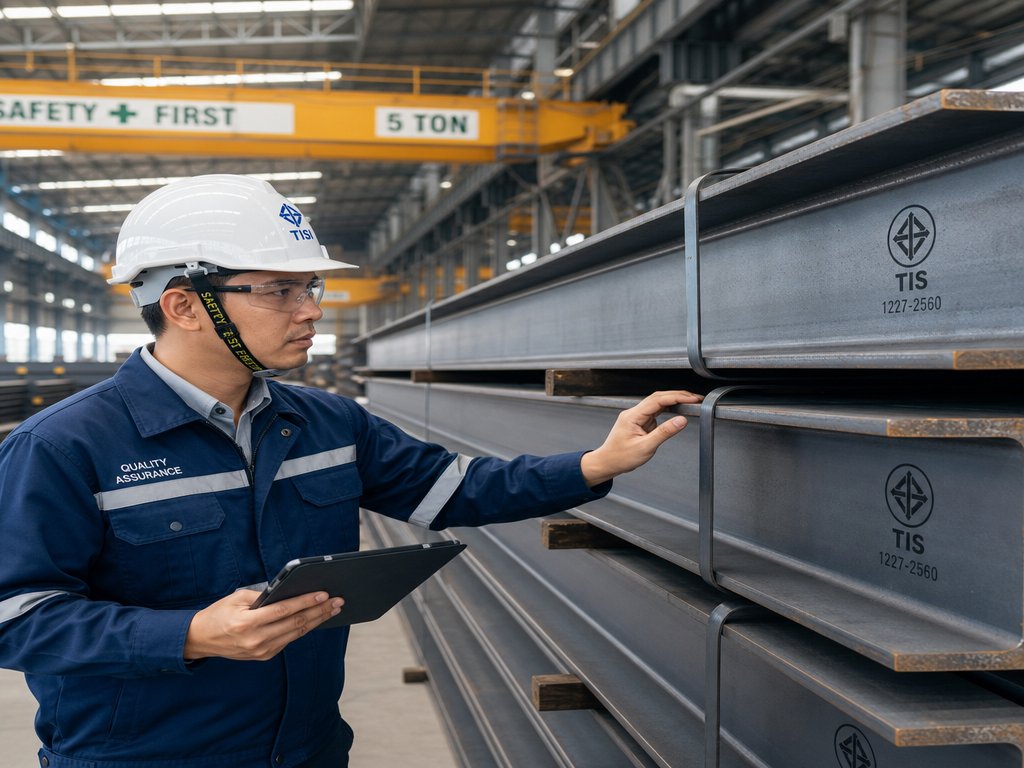
Counterfeit and non-compliant construction materials create risk long before installation. A PVC pipe that does not match its declared pressure class, a structural steel member with unclear traceability, or safety equipment carrying a fake certification mark can expose a contractor, developer, and procurement team to failures, delays, legal issues, and rejected inspections.
In Thailand, the key reference point is the Thai Industrial Standards Institute, or TISI, under the Ministry of Industry. TISI administers Thai Industrial Standards, widely known as TIS. For procurement managers, understanding how to read the TIS mark and verify supporting documents is an essential step in controlling quality and avoiding non-compliant imports.
What TIS Certification Means
A TIS standard defines technical requirements for a product, such as material composition, dimensions, strength, pressure rating, performance, marking, testing, and inspection methods. Some TIS standards are voluntary, while some are compulsory for products that must comply before they can be manufactured, imported, or sold in Thailand.
- Voluntary standards: Products may apply for certification to demonstrate quality and conformity.
- Compulsory standards: Products must comply with the applicable TIS requirement before legal sale or importation.
- License scope matters: A valid license applies only to the specific product type, size, grade, model, factory, brand, and standard listed in the approval.
How to Read a Genuine TIS Mark
The exact marking requirement can vary by product standard, but procurement teams should generally look for these elements on the product, packaging, tag, label, or delivery documents.
- TIS mark or มอก. mark: The mark should be clear, consistent, and not blurred, stretched, reprinted over old packaging, or added as a loose sticker without traceability.
- Standard number: Check that the TIS number matches the product category. A pipe standard should not be used to support a steel product, and a general product certificate should not be used for PPE.
- Manufacturer or importer name: The name should match the invoice, packing list, certificate, and TISI database record.
- License number: The license must be active and relevant to the exact product being supplied.
- Product details: Size, class, grade, model, pressure rating, heat number, batch number, or production lot should be marked where required by the standard.
- Country of origin and factory details: For imported goods, confirm that the declared factory is covered by the license or approval.
Step-by-Step Verification for Procurement Managers
- 1. Identify the applicable standard: Confirm which TIS standard applies to the product. Do not rely only on supplier claims or catalog text.
- 2. Request complete documentation: Ask for TIS license copies, mill test certificates where relevant, import documents, product datasheets, test reports, and certificates of conformity.
- 3. Check the license status: Verify the license with official TISI channels or the TISI online license database. Confirm that the license is active, not suspended, and issued for the correct manufacturer or importer.
- 4. Match the scope: Compare the standard number, product description, size, grade, model, and factory location against the goods being delivered.
- 5. Inspect the physical goods: Compare product markings with documents. Inconsistent fonts, missing batch numbers, poor printing, and vague labels are warning signs.
- 6. Keep traceability records: File photographs of product markings, delivery notes, invoices, certificates, and test reports by project and purchase order.
Product-Specific Checks
PVC Pipes
For PVC pipes, the risk is not just a fake logo. Non-compliant pipes may have incorrect wall thickness, poor impact resistance, inaccurate pressure rating, or unsuitable resin formulation. In procurement, verify the pipe size, class, pressure rating, standard number, brand, production lot, and manufacturer. Markings should be printed along the pipe body at regular intervals and should correspond to the delivery note and certificate.
- Check pipe diameter and wall thickness against the stated class.
- Confirm whether the pipe is for potable water, drainage, electrical conduit, or another application.
- Reject mixed lots with inconsistent markings unless the supplier provides clear traceability.
Structural Steel
Structural steel requires stronger documentation discipline because the material becomes part of the building load path. For steel sections, plates, rebar, or other structural products, verify the grade, size, heat number, mill name, test certificate, and applicable TIS or project specification. A TIS mark alone is not a substitute for matching mill certificates and traceability.
- Match heat numbers on the steel, tags, and mill test certificate.
- Check yield strength, tensile strength, elongation, and chemical composition where required.
- Ensure the supplied grade matches the engineer-approved specification, not merely a similar commercial grade.
Safety Equipment
Safety helmets, gloves, eye protection, harnesses, reflective vests, and safety footwear must be checked against the correct safety standard and intended use. Counterfeit PPE often looks acceptable but fails under impact, heat, chemical exposure, or fall arrest conditions.
- Confirm the product model and size range listed in the certificate.
- Check production date, expiry date, batch number, and instruction manual.
- For fall protection, request test reports and avoid products with unclear webbing, stitching, hook, or lanyard markings.
Red Flags of Counterfeit or Non-Compliant Materials
- The supplier provides only a photo of a certificate and refuses to share a traceable license copy.
- The TIS number does not match the product category.
- The license holder is different from the manufacturer, importer, or brand without explanation.
- The certificate is expired, blurred, edited, cropped, or missing pages.
- The product marking is inconsistent across the same shipment.
- The price is significantly below market level with urgent delivery pressure.
- The supplier cannot provide batch, heat, lot, or production traceability.
Best Practice: Build TIS Verification into Purchasing
Counterfeit prevention should not depend on the site team discovering a problem after delivery. Add TIS verification to your procurement workflow from vendor approval to final receiving inspection.
- Pre-qualify suppliers and require official documents before issuing purchase orders.
- State the required TIS standard, grade, class, and documentation in the purchase order.
- Use approved supplier lists for controlled products.
- Train receiving teams to photograph markings and compare them with documents.
- Quarantine suspicious goods until verification is complete.
For B2B buyers in Thailand, the safest approach is to work with distributors that understand local compliance, maintain document traceability, and source from reliable manufacturers. Sputnik Trading supports procurement teams by supplying construction materials with clear specifications, consistent documentation, and practical guidance for TIS verification.